
It's almost tomato time again!
We picked our first handfuls of cherry tomatoes today, so in the spirit of the looming abundance I thought I'd give you a run through of how we grow tomatoes at Spring Tide Farm.

Our tomato seedlings are started the first week of March in our (newly) heated seedling greenhouse - this year we started 600 plants. Tomatoes take a long time to grow so planting them in early March ensures we'll have a crop by late July. The seedlings are transplanted into our high tunnels in mid-to-late May. Our rule of thumb is usually to wait until after the May long weekend, but we also take note of when the full moon in May occurs (because it's usually quite cold on this night). This year the full moon was early in the month so we were confident that we could plant out the tomatoes sooner than later. The Spring was cool and wet so the plants didn't end up growing quickly, but they have caught up now.
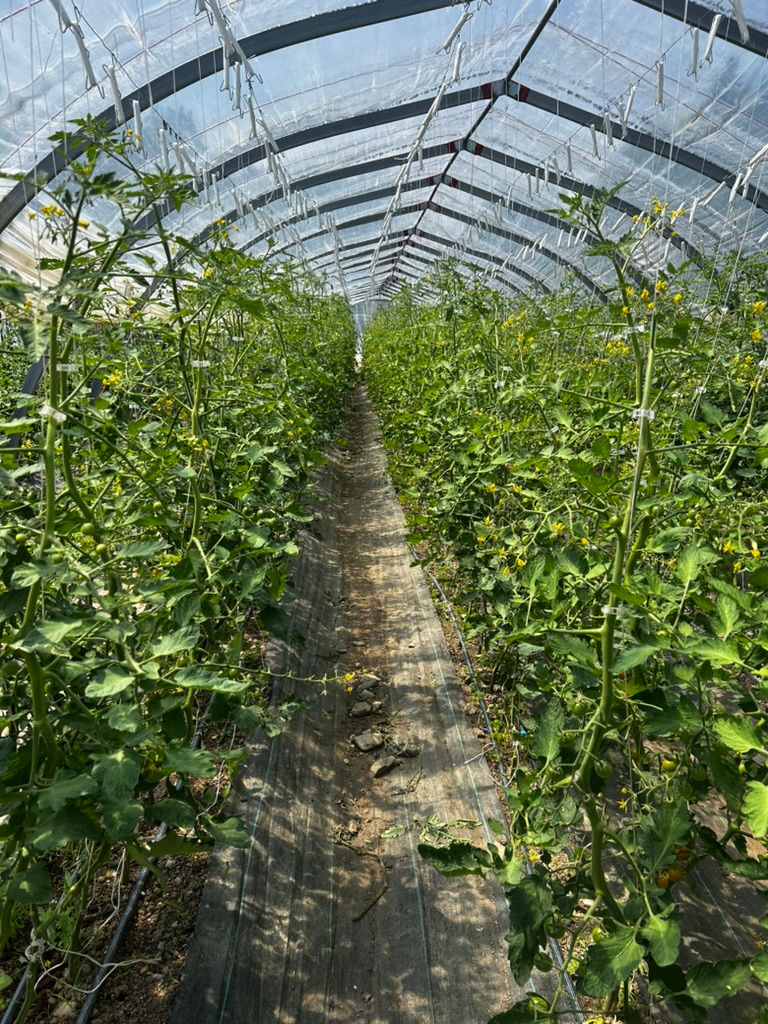
We believe that good tomato maintenance is the key to success. We grow indeterminate tomatoes, which means they have a vining tendency and need to be maintained closely (on the other hand, determinate tomatoes grow dense and bushy). You'll notice the black fabric on the ground in the photos - we use landscape fabric to keep the weeds at pay in all of our high tunnels. We prune and trellis the plants every two weeks beginning once the tomatoes are about 18 inches to 2 feet tall. We trellis them using twine that is spooled around a double hook, and the hooks are attached to heavy wires that are strung across the tunnels. To attach the twine to the plant, we use small clips (you can see the twine and clips in the photo on the right). We start with one clip close to the base of the plant and continue to attach clips to the twine as the plants grow. Keeping the plants well-trellised ensures they won't droop under their own weight and allows for easier picking.

Pruning is critical for good air flow around the tomato plants. Pruning the leaves and suckers (additional growing tips that grow in the nook between the stem and branches) ensures that the plant is putting its energy into growing fruit and not additional foliage, and staves off potential disease (blight is the big one to look out for) due to overcrowding. We will continue to prune the plants until early to mid August.
The other critical component of tomato maintenance for us is fertilizing. When we transplant the tomatoes in Spring, they all receive a good dousing of organic fish fertilizer, high in all three of the main nutrients (nitrogen, phosphorus, and potassium). As the season progresses and we are more concerned with fruit production as opposed to overall plant growth, we switch to an organic phosphorus-heavy fertilizer (because phosphorus is key for fruit growth). We give them 'power bloom' (the name of the phosphorus fertilizer) twice during the growing season.
We're excited to share the tomato harvest with you this season! If you have any questions about tomato production feel free to ask at the market or CSA pick-up.


Comments